
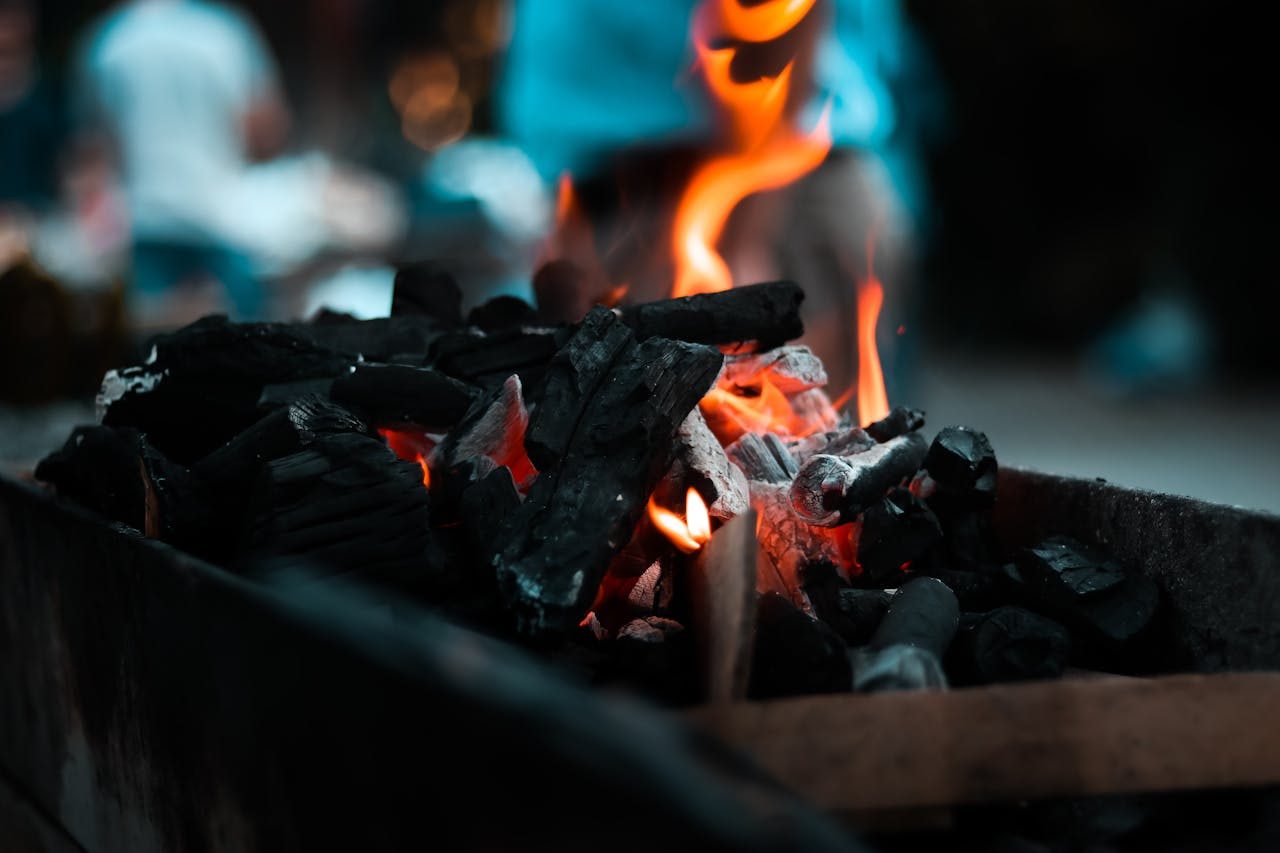
The differences between charcoal and briquettes on the BBQ might not be easy to spot at first, but both have their own advantages, or perhaps you should actually mix charcoal and briquettes. To find out whether charcoal or briquettes best suit your way of barbecuing, this blog gives you everything you need to make that choice. There's also a handy comparison table.
The difference between charcoal and briquettes
To start with, it's important to explain the differences between the two.
Charcoal: hot quickly, full of flavour
Charcoal is ideal when you want speed while barbecuing in your outdoor kitchen. Charcoal burns faster and gives you that classic, smoky barbecue flavour. Charcoal is a natural product, namely pure wood, and therefore reaches high temperatures quickly. So keep the lid of your BBQ open.
It's perfect for grilling:
- Steaks and burgers, or other thin cuts of meat
- Vegetables with a crunchy bite
- Dishes that require short grilling times
Please note: charcoal burns out faster than briquettes. So for a longer (sociable) barbecue, you'll often need a bit more to keep going.
BBQ briquettes: stable heat for long grilling sessions
BBQ briquettes are compressed blocks of charcoal dust and other natural binders. They are also called wood briquettes. They take a little longer to come up to temperature, but once hot, they keep burning evenly for a long time. That makes them ideal for slow cooking, such as:
- Large cuts of meat like pulled pork or spare ribs
- Dishes that need to be cooked indirectly
- Barbecuing with a lid or a smoker
Below are the differences at a glance
| Feature | Charcoal | Briquettes |
|---|---|---|
| Heating speed | Hot quickly (within 15–20 minutes) | Slower to reach temperature (25–40 minutes) |
| Temperature | High temperatures | Constant, even heat |
| Burn time | Shorter, burns out faster | Longer-lasting and more stable |
| Flavour | Intense, smoky barbecue flavour | Less pronounced smoky flavour |
| Suitable for | Steaks, burgers, vegetables | Pulled pork, spare ribs, slow cooking |
| Use with lid | Lid usually open | Ideal with a closed lid or smoker |
| Composition | Pure wood | Compressed charcoal dust with natural binders |
| Temperature control | Rapid changes possible | Easy to keep stable |
Tips for making the right choice
To make the choice easier, here are a few more tips:
- Speed: Want to get started quickly? Go for charcoal.
- Length of the barbecue: Planning a long session? Then choose briquettes.
- Temperature control: Briquettes offer more control during long grilling sessions.
- Flavour: Many enthusiasts find that charcoal gives a more intense smoky flavour.
Both fuels are easy to light with firelighters or a chimney starter. Whatever you choose, always ensure good ventilation and handle hot coals safely.
Frequently asked questions
Which comes first, briquettes or charcoal?
What you use first depends on your goal. If you're using both at the same time, start by lighting the charcoal. Charcoal ignites faster and helps get the briquettes going. Once everything is glowing, you have a stable base for barbecuing.
Which is healthier, charcoal or briquettes?
Charcoal is generally healthier than briquettes, because it contains fewer additives. Briquettes are often made from compressed wood residues and binders, which can release extra substances when burned. Preferably choose natural, untreated charcoal.
Why shouldn't you use briquettes in a kamado?
In a kamado it's best to use charcoal, not briquettes. Briquettes produce more ash and can disrupt the airflow and temperature control. Some briquettes may also contain chemical binders that can damage the ceramic or affect the flavour.