
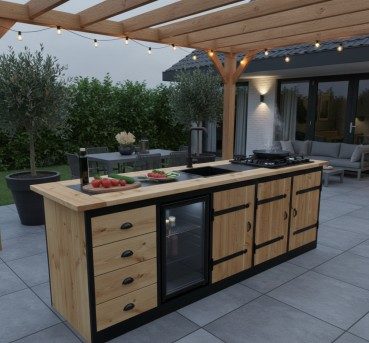
An outdoor kitchen with lots of accessories isn't automatically less sustainable than a basic model. It mainly depends on how you use it and how long it lasts. A fully equipped outdoor kitchen that gets intensive use can be more sustainable in the long run than a simple model that soon needs replacing. In this blog you'll read exactly where the environmental gains or costs lie, so you can make a choice that suits your situation and sustainability goals.
Material use: basic vs fully equipped outdoor kitchen
When you're going for sustainability, you quickly think: the less stuff, the better. And that's partly true. An outdoor kitchen with just a worktop and hob requires fewer raw materials to produce. But also look at what you add to it later. If after two seasons you end up buying an extra cabinet, installing a separate fridge and having a tap fitted, you'll ultimately have used more material than if you'd gone for a complete model straight away.
You can opt for a made-to-measure outdoor kitchen that integrates everything cleverly. That brings concrete benefits:
- Less packaging material thanks to one integrated delivery instead of several separate purchases.
- More efficient use of space because everything is designed to measure.
- Installation work done in one go means less transport and fewer labour hours.
- Better coordination between components ensures a longer lifespan.
Energy use: fridge and tap in your outdoor kitchen
This is where it gets interesting. A fridge in your outdoor kitchen uses electricity, that's clear. But also look at what you save. If you're constantly walking between indoors and outdoors for cold drinks, ingredients and clean plates, the kitchen door opens dozens of times. In summer that means heat loss every time and extra work for your air conditioning or cooling indoors.
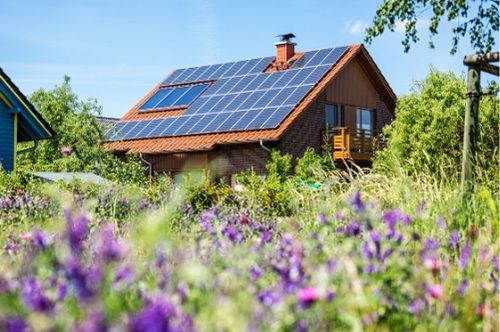
An outdoor fridge connected to your solar panels can more than make up for that energy loss. Especially if you cook outside often and for long periods. The same goes for a tap: yes, it uses water. But if you connect it to a rainwater system or greywater system, you're actually contributing to a closed loop. So it's not about the accessories themselves, but about how cleverly you use them.
Comparison table: basic or fully equipped outdoor kitchen
| Aspect | Basic outdoor kitchen | Fully equipped outdoor kitchen |
| Material use | Low at purchase | Higher, but integrated |
| Energy use | No extra appliances | Fridge and lighting (can be connected to solar panels) |
| Ease of use | More trips indoors | Everything in one place |
| Lifespan | Possibly shorter replacement cycle | Lasts longer if good quality |
| Expandability | Difficult to expand modularly | Often designed complete from the start |
Lifespan: a complete model lasts longer
An outdoor kitchen that actually gets used will wear. That's only logical. But a cheap basic model that shows cracks within three years, or where the wood splits because it isn't thick enough, doesn't help anyone. Then you buy again, doubling the environmental impact.
Fully equipped outdoor kitchens are made from good materials. Douglas fir, solid finishes and robust drawers that can withstand the Dutch climate. A construction like that will easily last ten to fifteen years. In fact, if the fridge or tap breaks, you simply replace that one component. The rest stays put. With a cheap model, you're more likely to replace the whole thing once it no longer does the job.
When is an outdoor kitchen with accessories more sustainable?
A fully equipped outdoor kitchen is only more sustainable if you actually use it. If you cook outside three times a summer, you'd be better off choosing a simple model. But for anyone who eats outdoors every day from April to October, entertains several people or wants to reduce their indoor consumption, a fully equipped set-up really pays off.
It's all about the balance between investment and return. A fridge that runs intensively on solar power for six months a year and saves you a hundred trips indoors? That's a win. A tap that uses rainwater and works every day? Same story. The sustainability gain isn't in fewer accessories, but in smarter use.