
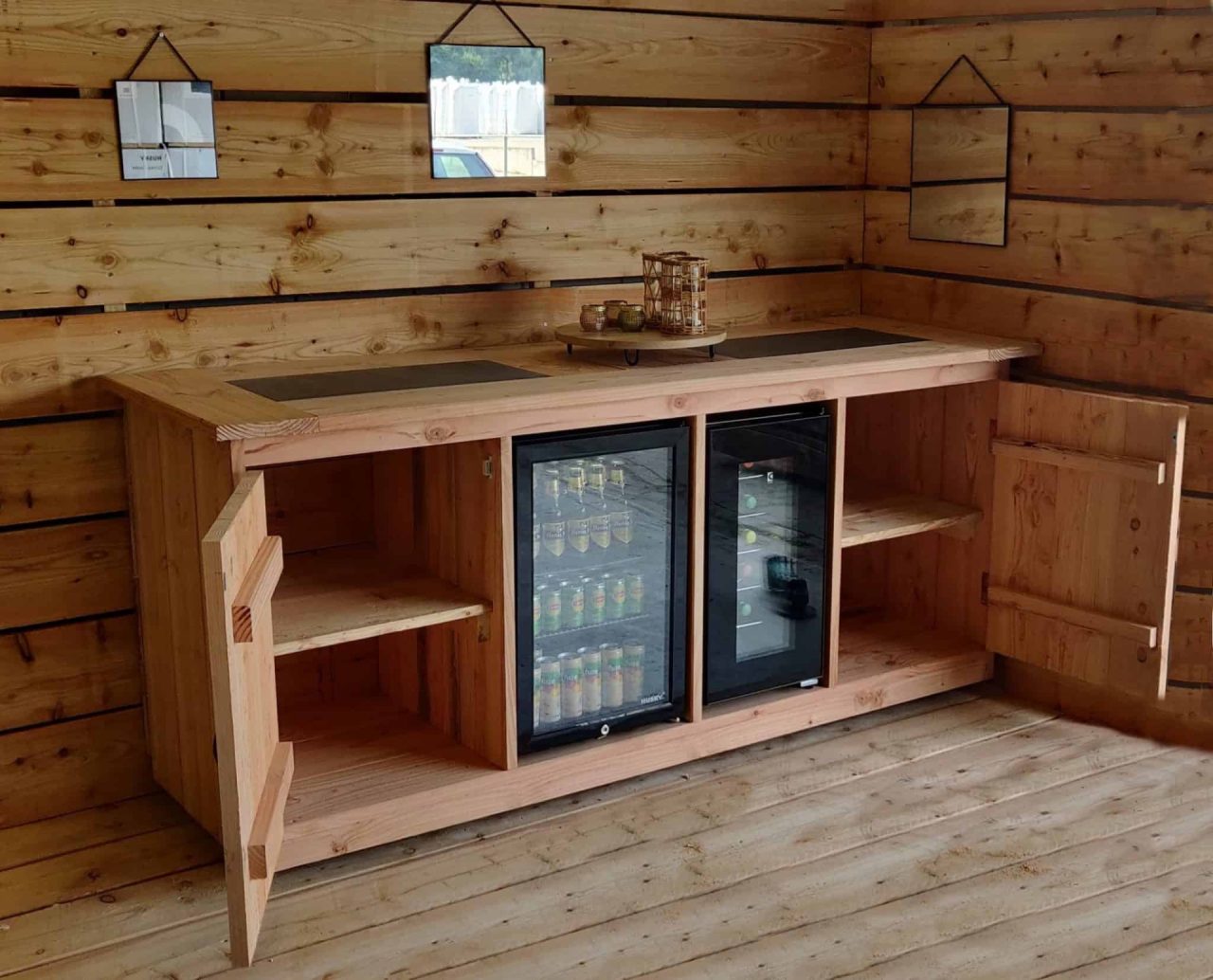
An outdoor kitchen is a great way to enjoy summer days with friends and family. But which wood should you choose to build a kitchen like that?
There are several options to choose from, including pressure-treated spruce, Douglas fir and scaffolding boards. Each of these materials has its own unique characteristics and advantages.
In this article we look at the various aspects of pressure-treated spruce, Douglas fir and scaffolding boards, so that you can make a well-informed choice when building an outdoor kitchen.
Why a wooden outdoor kitchen?
A wooden outdoor kitchen really has a lot of advantages. To start with: wood instantly gives your garden a warm, cosy atmosphere. It's a natural material that fits in superbly with green surroundings and makes your whole garden just that little bit more inviting. On top of that, a wooden outdoor kitchen often ties in nicely with the rest of your garden design.
Another advantage of a wooden outdoor kitchen is that it is relatively easy to maintain. Regular cleaning and finishing with a water-repellent oil or paint is often enough to keep the wood in good condition.
What's more, wood is a durable material. Many types of wood are naturally resistant to rot and insects. These types of wood can also take a few knocks. A wooden outdoor kitchen also offers lots of flexibility in design. It can be made to measure for your specific garden and personal preferences, whether you want a modern and elaborate style or a simple and classic one.
In short, a wooden outdoor kitchen can be a beautiful addition to your garden, with many advantages such as a natural look, easy maintenance, durability and flexibility in design. A wooden outdoor kitchen is also perfect to customise if, for example, you want an outdoor kitchen with gas or an outdoor kitchen with BBQ.
How do you make sure an outdoor kitchen lasts a long time?
There are a few things to look out for when having a wooden outdoor kitchen built. Wood is a natural material and needs to be treated differently from, for example, a stone outdoor kitchen. Below are the most important points and tips to bear in mind if you want to have an outdoor kitchen built that will last a long time.
- Type of wood: The type of wood you choose is very important, because it determines how resistant the outdoor kitchen is to the weather. The most popular types of wood for outdoor kitchens are pressure-treated spruce, Douglas fir and scaffolding boards. Each of these types of wood has its pros and cons. We'll go into this in more detail later.
- Treatment: Depending on the type of wood chosen, it's important that the wooden outdoor kitchen is treated properly. This can be done, for example, with a water-repellent sealer, paint or oil. This helps to protect the wood against moisture and discolouration.
- Ventilation: A wooden outdoor kitchen needs to be well ventilated to prevent moisture from building up. This can be done, for example, by fitting an air vent in the bottom of the kitchen.
- Placement: Make sure the wooden outdoor kitchen is placed on a dry, level surface. This helps to prevent the wood from warping or the kitchen from standing crooked.
- Maintenance: A wooden outdoor kitchen requires regular maintenance to stay in good condition. This can include, for example, sanding and re-treating the wood to prevent it from discolouring or weathering.
By taking these points into account, your wooden made-to-measure outdoor kitchen or Green Egg outdoor kitchen will keep looking beautiful and last for years.
Which wood for an outdoor kitchen
There are three different types of wood that are suitable for building an outdoor kitchen. These are:
- pressure-treated spruce
- Douglas fir
- scaffolding boards
All three types of wood have their pros and cons; below you can read the most important characteristics of each.
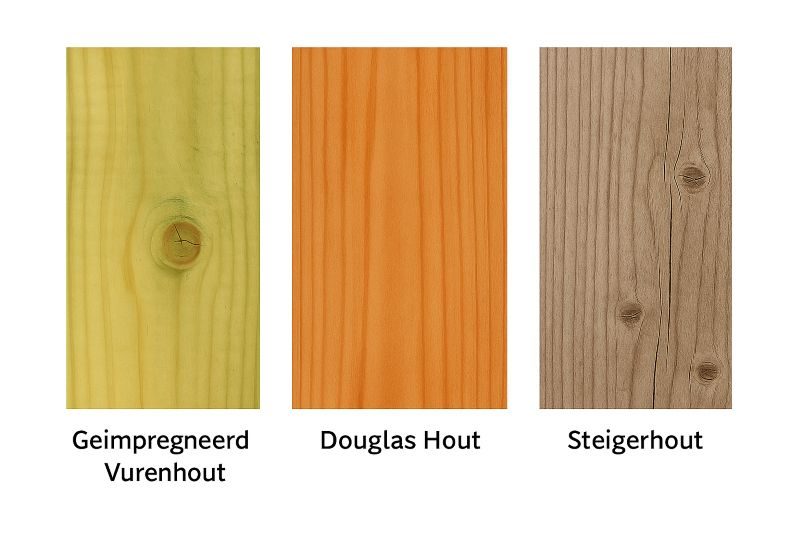
Pressure-treated spruce
Pressure-treated spruce is spruce that has been treated with chemicals to make it rot-resistant. These chemicals, also called impregnating agents, are injected deep into the wood, making it more resistant to rot and insects. As a result, the wood can last longer than untreated spruce.
Pressure-treated spruce is one of the most affordable options for outdoor kitchens, which is why it's a popular choice. It's lightweight, easy to work with and has a natural look. It's also reasonably resistant to the weather.
However, pressure-treated spruce is still less resistant to the weather and moisture than hardwoods, and it can discolour and weather if it isn't treated regularly. So it does need to be treated regularly with a water-repellent sealer, paint or oil to protect it against moisture.
Douglas fir
Douglas fir is a type of wood that comes from the Douglas fir tree. It's a hard, durable wood with a beautiful, natural colour. Douglas fir has a good structure, is easy to work and has pleasant properties to work with, such as high stiffness and strength.
Douglas fir is often used for various construction and furniture projects, and is also a popular choice for outdoor kitchens. Douglas fir is robust and durable, and has a gorgeous natural colour. It's also reasonably resistant to the weather and moisture.
Douglas fir is a great choice for an outdoor kitchen. It's aesthetically attractive, durable, and reasonably resistant to the weather and moisture. It does require maintenance, but not much more than other types of wood need too. Feel free to have a look around our Douglas fir outdoor kitchens.
Scaffolding boards
Scaffolding wood has become increasingly popular in recent years. Scaffolding wood is wood that has been used for scaffolding and is usually reused. It's often used for outdoor projects, such as outdoor kitchens, because it has a unique, rugged look.
Scaffolding board outdoor kitchens have a lovely weathered look, because of the wood's use in construction. This gives them a unique charm and an industrial appearance that many people find very attractive.
It is important to know, however, that scaffolding wood is often already damaged and may contain rot or cracks. This is because the wood has already been outdoors before. Because the wood has been used before, it doesn't need to be impregnated. Scaffolding wood can weather and discolour quickly in the open air, so it requires regular maintenance. This means you'll need to treat the wood regularly with a water-repellent sealer, paint or oil to protect it against weathering.
Despite these points, scaffolding wood is a great choice for an outdoor kitchen. The unique appearance of weathered wood and the industrial look create a unique atmosphere in your garden or on your patio. Do bear in mind the extra maintenance you'll need to do if you decide to use scaffolding wood.
Weather-resistant wood: the best wood for outdoors
Curious which of the three types of wood is the most weather-resistant and therefore the best for outdoor use? Read on below!
Weather resistance of Douglas fir
Douglas fir is naturally a weather-resistant wood. This gives Douglas fir high durability, making it definitely suitable for outdoor use. In principle, the wood can be used without treatment, but it's important to know that Douglas fir can turn grey over time. Some people actually really appreciate this ageing process.
On average, Douglas fir lasts around 10 to 15 years without maintenance and in various weather conditions. To extend its lifespan, regular maintenance with a protective coating, such as a stain or oil, can be applied.
Weather resistance of scaffolding wood
Scaffolding wood isn't actually a separate type of wood in itself; in most cases it's reused spruce. This means it isn't the most durable and weather-resistant type of wood. Untreated, scaffolding wood lasts around 5 to 10 years on average.
So it's important to maintain this wood regularly to make it weather-resistant. The best way to do this is to use a weather-resistant coating, such as varnish or stain.
Weather resistance of pressure-treated spruce
Spruce on its own is not a durable or weather-resistant wood. Pressure-treated spruce, on the other hand, is specially designed to make it weather-resistant. This makes it ideal for outdoor applications such as fences, decking and outdoor kitchens.
The lifespan of pressure-treated spruce depends on the impregnating agent used. On average, pressure-treated spruce has a lifespan of 10 to 20 years without maintenance.
Pressure-treated spruce is a good weather-resistant wood and generally requires little maintenance. Still, it's a good idea to clean the wood and re-impregnate it every so often. If you don't, the wood can discolour and weather. So maintenance is good for extending the lifespan of the wood.
Need help choosing the right type of wood for your outdoor kitchen?
If you're looking for advice about your outdoor kitchen, you can always contact us; we're happy to help. Buitenkeukendeal specialises in building outdoor kitchens and we're happy to provide information and advice.
From examples of outdoor kitchens to prices, and from material information to the latest trends, we can help you make a good choice. So if you still have doubts, get in touch with us and we'll do our best to advise you as well as we can!